

The last time I published in this space, I promised that further coverage of Tribeca 2026 would be coming the next day. That was over a week ago. Life (and my own laziness) got in the way, but I’m back with the penultimate piece about my Tribeca 2026 adventures. Below, I finish up my coverage of documentaries before transitioning to the narrative features I saw at the fest.
**********
One of the docs I was most enthusiastic to see at Tribeca was Bob and David Climb Machu Picchu, about the two comedy legends, David Cross and Bob Odenkirk, as they set forth on one of Cross’s bucket list items, the punishing climb to visit the 15th-century Peruvian Inca citadel. I learned a lot about the duo’s history. A comical highlight of the film comes when the two men arrive in a Peruvian village before the hike. No one in the village recognizes David, but Bob is approached by numerous locals who want to tell him how much they love Breaking Bad and Better Call Saul. The unlikely and relatively newly-minted action movie star Odenkirk also relates the heart attack health scare that nearly ended his life.
Both men speak about their difficult relationships with their fathers, which led to the biggest revelation of the film for me. Cross has a bit in his 2004 comedy album It’s Not Funny in which he laments how boring his friends have become since having babies, implying that having kids is one of the last things the comedian wants to do. As someone who has never been interested in having kids myself, this was one of my favorite bits on the album. We discover in Bob and David Climb Machu Picchu, however, that Cross had desperately wanted kids for years before starting a family with his wife, actor Amber Tamblyn. It was his troubled relationship with his own father that made Cross want to have kids, so he could do a better job at it than his own dad. If you’re a fan of Mr. Show with Bob and David, then Bob and David Climb Machu Picchu will likely float your boat.
**********
The Gymnasts of Fisherman Colony is an inspiring documentary, executive produced by Malala Yousafzai and Mariska Hargitay, about the first female gymnastics team in Pakistan. The film primarily focuses on a team of “stateless” Pakistani girls who can’t receive citizenship documents because of the exclusionary policies of the Pakistani government. In a society that believes girls practicing gymnastics is unseemly at best and blasphemous at worst, it was stirring to see this group of powerless young girls strive to make their lives better in a tangible way through sport. Human rights lawyer Tahera Hasan fights throughout the film to give these girls a chance at something better than crushing poverty and second-class citizenship.
**********
From executive producer Rachel Bloom, creator and star of Crazy Ex-Girlfriend, Hollywood Does Abortion focuses on how the depiction in movies and TV of this vital health care procedure has both helped and hindered how our society relates to and legislates abortion care. The documentary begins its timeline of abortion as depicted in filmed media with a two-part episode of the 1970s TV series Maude, in which the title character agonizes over whether or not to have an abortion. The episodes aired only two months before the US Supreme Court’s Roe v. Wade decision legalized access to abortion for women in the entire country.
Hollywood Does Abortion then takes the viewer through the subsequent fifty+ years of depictions of abortion on screen, from compassionate and empathetic instances like Dirty Dancing, to the regressive and sensationalistic take from a show like Law and Order. The movie camps out with Law and Order for quite a while so we can understand how damaging the show’s retrograde views on abortion were. A few of the interview subjects take the time to let the audience know how much they hate how the long-running NBC procedural treated the topic.
The film also explores a trope that Rae and I enjoy pointing out to each other whenever we see it on screen. Creatives in film and TV want to explore the issue of abortion, but they usually do so with a last-minute cop-out to ensure the abortion never actually happens. The always convenient miscarriage or a Paul’s-road-to-Damascus decision to keep the baby ensures that anti-choice audience members getting pissed off, or showing the icky procedure actually happening, is avoided. A movie like Knocked Up factors heavily in the discussion of the trope.
Featured in Hollywood Does Abortion are actors Adrienne Barbeau and Bloom, film critic Dana Stevens, abortion rights activist and co-creator of The Daily Show Lizz Winstead, and Julie Wong, a producer and writer for Grey’s Anatomy. The creator of Grey’s Anatomy, Shonda Rhimes, is singled out for praise as an artist who isn’t afraid to confront the realities that women are facing in our post-Roe society.
Films like Never, Rarely, Sometimes, Always and Obvious Child are highlighted as other recent examples of realistic depictions of women seeking abortion care. Since the currently ascendant Christian nationalists in control of our nation are doing everything that they can to keep women from accessing this form of health care, Hollywood Does Abortion is a vitally important documentary tracing the intersection of entertainment and politics.
**********
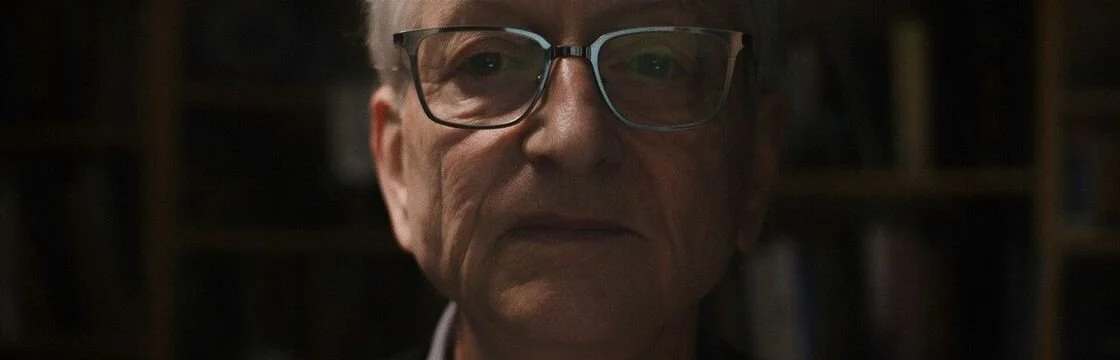
AI: Probably Nothing to Worry About – the documentary’s tongue-in-cheek title was suggested by an AI chatbot – is a harrowing look at the history of artificial intelligence as we currently understand it and the disturbing implications for our future if we continue to allow it unregulated growth. Director Nick Holt doesn’t so much expose the insanity of the actual AI programs as he does the men who created and are exploiting it for unbelievable profit.
The sections of the film that deal with AI psychosis – which, as the film documents, have led to multiple suicides – are heartbreaking. They are also enraging as we learn the men behind these potentially deadly programs don’t give a single, solitary fuck when it comes to the safety of the public. AI luminaries like Sam Altman and the odious Elon Musk are exposed as being degrees away from complete insanity and megalomania.
A still from AI: Probably Nothing to Worry About.
We see the trajectory of the promises made by these men at the beginning of the AI boom in 2022 – this technology will cure cancer – to the ignominious present state of the industry – basically, in the absence of the earth-shattering scientific discoveries promised, AI is being turned into sex-chat-bots and porn generation machines. This is to say nothing of the political and societal destabilizing effects that bad actors are using this technology to produce, which the doc also explores. AI: Probably Nothing to Worry About should be required viewing for anyone who has outsourced their brain to ChatGPT searches.
**********
While my experiences with documentaries at Tribecca 2026 were mostly positive, the fiction features on offer at the fest were more of a mixed bag, as evidenced by my opening coverage of Gail Daughtry and the Celebrity Sex Pass and In the Hand of Dante.
The same day I saw Gail Daughtry, the opening day of the fest for me, I also saw a movie that blurs the lines between fact and fiction with an ethereal aesthetic and inventive dream sequences. I’m starting my major coverage of the narrative portion of my Tribeca 2026 adventures with some sleight of hand. Vanishing Tracks, from director Hamed Zolfaghari, moves, breaths, and sleeps like a fiction film.
This tale of nomadic Qashqai sheepherders, who travel across the landscape of Iran with the goats that supply their living, is actually a documentary. Only one fleeting moment in the movie – when an irate man who does not want the subjects of the film to move their goats across his property looks directly at the camera and acknowledges the filmmakers’ presence – betrays that fact. If you knew nothing about the movie going in, as I did, only that one moment would give you pause about what you were watching.
Valliolah and Dorna are a married couple with three adult sons who have no interest in continuing the family business. One son attempts college but is expelled for unruly behavior. The other two are too busy playing internet-based games on their cell phones to give much thought to the sheep that provide the family with sustenance. The most non-documentary aspect of the picture is Zolfaghari’s inclusion of dream sequences, mainly from the perspective of the father, Valiollah. The director uses the aesthetic of grainy VHS footage for these dreams, giving them a nostalgic quality.
The bulk of the film concerns the theft of twelve goats from Valliolah’s heard and his attempts to get them back. The annual nomadic move of the heard, the clash of ancient nomadic ways of life with the more alluring call of modernity, as seen in the sons’ rejection of their family’s way of life, are also captured.
It’s a study in intergenerational conflict. Valiollah wants his heirs to continue his way of life, even though they clearly have no interest in doing so. It’s a phenomenon that has played out across every imaginable culture and time in history. Zolfaghari blends the straightforward cinéma vérité of this family’s day-to-day struggles with the oneiric sequences to create an almost magical realist documentary. It’s also a movie that the US population should see, to humanize a people that our government has decided to launch an illegal, offensive war against, causing pointless death and destruction.
**********
Day two of the fest supplied two movies that didn’t move the needle much for me. She Keeps Me Young is a cringe comedy about Michelle, a woman who finds her spark again when she befriends a teenager in her dance exercise class. This newfound connection infuriates Michelle’s friend, Kelly, and the fallout between the two supplies much of the humor of the film, most of which simply did not land with me. The hilarious John Early is completely wasted in a supporting role.
**********
Recluse is a claustrophobic horror film from Henry Chaisson about Joan, a sound recordist and mixer for movies. When her famous artist father is severely burned and bedridden after an accident, Joan returns to her family’s New England estate to care for him. Recluse’s convoluted plot and reliance on jump scares left me cold. I was also perplexed by the decision to cast Xander Berkeley – who co-starred in TV’s 24, as well as appearing in Terminator 2: Judgement Day and Candyman – as Jane’s father, only for him to spend the overwhelming majority of the movie bedridden with a mask over his face.
**********
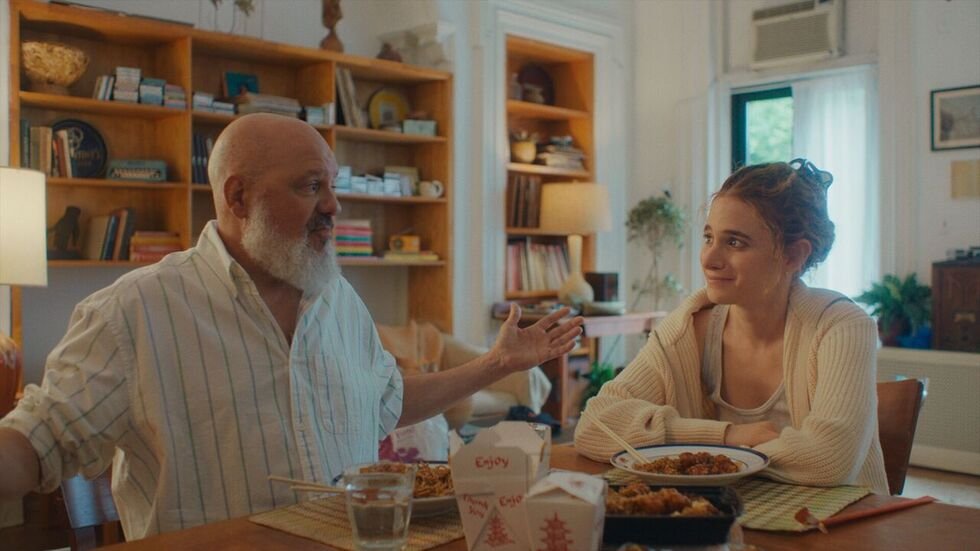
Lucy Schulman is a delightful dramedy from writer/director Ellie Sachs, who also stars as the titular character. When she discovers her boyfriend is cheating, late-20-something Lucy moves back in with her dad to lick her wounds and try to forge a path forward. Bob and David Climb Machu Picchu alum David Cross plays Lucy’s dad with warmth and vulnerability. Sachs as Lucy is relatable and funny.
A still from Lucy Schulman.
Lucy is the everywoman whose foibles audience members her age can see themselves and their peers struggling through, while older viewers (like me) can recognize and remember what life at that age was like. A few clumsy plot machinations aside – a second breakup for Lucy comes out of nowhere and feels like a shortcut to move the story forward – I really enjoyed this slice-of-life debut feature from Sachs. She is also clearly in love with New York City and beautifully makes the city an uncredited character in her film.
**********
Only What We Carry is an intriguing experiment from filmmaker Jamie Adams, who doesn’t use conventional scripts, but relies heavily on improvisation for his movies. He is also known for tight shooting schedules. This latest effort was filmed in only six days. The film focuses on Charlotte, a dancer at the famous Moulin Rouge cabaret, who has been unmoored since Julien, her mentor and the choreographer at the club, suddenly and without announcement left his position.
Charlotte spirals even more when Julien releases an autobiography in which he claims to be able to create a dancer out of a person with no talents, intimating that Charlotte was one of his greatest creations. Charlotte confronts Julien when the two end up at the estate of a publishing friend of Julien’s, John Percy, along with a young couple, and Charlotte’s sister, Josephine, who kindles a romance with John.
The all-star cast of Only What We Carry is as intriguing as Adams’s unconventional approach. Simon Pegg continues to prove he’s up to the task of heavy pathos as Julien. The character must confront his abusive behaviors towards Charlotte as well as, we can assume, hundreds of other dancers under his control during his reign at the Moulin Rouge. Sofia Boutella creates a character always on the verge of a breakdown in Charlotte, but she is also learning to stand up for herself while staring down her demons.
Charlotte Gainsbourg plays Charlotte’s sister, Josephine, and, improbably, Quentin Tarantino plays John Percy with a surprising warmth. Tarantino has a reputation as an atrocious actor – his performances in Reservoir Dogs and Pulp Fiction are the worst things about those films – and, make no mistake, in Only What We Carry, the iconic director can’t quite hold his own with the other performers on screen. Tarantino seems to think that laughing ceaselessly in between line deliveries is the key to a great performance. He does, however, hit some surprisingly resonant emotional notes, especially in a scene when the character visits a tree that was special to him and his now-dead wife.
**********
I feel much more confident that the last part of my Tribeca 2026 coverage will, in fact, be available here tomorrow. Until then!