

And now for the conclusion of my Tribeca 2026 coverage!
**********
I’ve got something for you to check out when Spooky Season rolls around. Hallowarrior is a gruesome bit of horror fun that tells the story of Pumpkin, a teenager who thinks she’s the only survivor in a post-apocalyptic wasteland. Pumpkin lives her life like every day is Halloween, but the fun comes to an end when a murderous and sadistic band of raiders shows up at her doorstep.
Milly Shapiro plays Pumpkin in her second feature film role, after her debut in Ari Aster’s bonkers Hereditary. Shannyn Sossamon, who also executive produced, is chilling as the leader of the homicidal gang trying to kill Pumpkin. Hallowarrior is a variation on the home invasion subgenre, and, at only 80 minutes, it doesn’t overstay its welcome. I can see it easily becoming a perennial cult favorite for horror fans during the month of October.
**********
Caity is a moving coming-of-age story about a girl trying to figure out who she is while dealing with her father’s relapse into alcoholism and drug abuse as they run their family haunted house in rural upstate New York. Chiara Aurelia delivers a quiet, intense performance as the titular Caity. Morgan Spector – aka Train Daddy from HBO’s hit series The Gilded Age – provides a brutally honest portrayal of addiction. Zach Cherry, everybody’s favorite sarcastic Innie from Apple TV’s Severance, provides support as Todd, an employee of the haunt who tries to look out for Caity when he sees her father begin to unravel.
**********
I took the opportunity during the last half of the fest to visit the Stonewall area of New York, where the fight for LGBTQ+ liberation began in earnest when the Stonewall Inn was raided by police in 1969, instigating an uprising. I felt awkward, as a middle-aged cishet dude, going down to Stonewall by myself, so I asked my hosts to be my gay chaperones for the trip, to which they happily agreed.
I also ditched the fest screenings on my penultimate day in NYC in order to explore the city a little more before heading home. The day before I left included an eight-mile run around Central Park, a subway trip up to Tom’s Restaurant – the iconic exterior location for the Seinfeld diner – and a stop by Times Square. That was all before heading back to my lodgings to get cleaned up, so my host Rex and I could check out Steven Speilberg’s latest, Disclosure Day, before enjoying a lovely sushi dinner.
**********
The last day of the fest included two more screenings before I needed to make my way out to LaGuardia airport for the return trip home. The morning got off to a raucous start with a concert documentary. Mumford and Sons: The House Band is a chronicling of the British folk band’s attempts to stand up a short tour in the US, traversed completely by train, while hosting dozens of fellow musicians along the way.
There’s been a backlash recently to the twee “stomp-clap” folk music scene of the early- to mid-2010s, but as a member of the Millennial generation, who live and die by our sincerity and earnestness, I will defend these gentlemen wholeheartedly. What the film makes clear is that the Mumford and Sons guys, as well as the artists they surround themselves with – which, in the film, includes the likes of Darius Rucker, Maggie Rogers, and Nathaniel Rateliff – are all first-rate musicians.
This little-tour-that-could was also designed without a predetermined setlist. The musicians are often working on arrangements and getting each song down only hours before the show starts. That doesn’t mean, however, that they ever fail to deliver for their fans. The sheer joy and artistry on display in Mumford and Sons: The House Band brought to mind another excellent concert film, Martin Scorsese’s The Last Waltz.
**********
In the documentary portion of my coverage, I mentioned beginning and ending my Tribeca 2026 adventures with docs centered on artists/critics. The final picture I saw at Tribeca was House of Criticism, about Roberta Smith and Jerry Saltz, the married couple who also happened to serve for decades as the art critics for New York Magazine and The New York Times.
While the couple spend much of the film talking about their philosophies on art, House of Criticism is also their love story. It is clear how much these two people care for each other, their shared love of art only one of the things that bind them. I loved seeing Jerry, this sophisticated and learned man of the arts, shoving bagged spinach into his microwave. As someone who considers himself a human garbage disposal when it comes to food, I was happy to learn that this great thinker about art doesn’t extend that discernment to every facet of his life.
To Jerry, food is merely fuel – as is evidenced by his three daily 7-11 Big Gulp cups filled with coffee over ice – in order to keep his mind focused on the work. He and Roberta live the life of the mind; everything else serves that purpose.
**********
With my screenings concluded and about six hours until my flight (don’t worry, it was delayed, making my six-hour wait more like a nine-hour wait), I decided to do some last-minute sightseeing before heading to the airport. One of my original plans was to take a picture of myself sitting on the stoop that Scorsese can be seen on when Cybill Shepherd crosses the frame early in Taxi Driver. After some research earlier in the week, I discovered that the stoop had disappeared when the site was redeveloped years later. Charles Palantine’s campaign headquarters is now the Bank of America Financial Center. So it goes.
A short subway ride from the theater that I had spent the last nine days in brought me to Old St. Patrick's Cathedral, the church used for the baptism scene at the end of The Godfather. I’m an atheist, but I love really old churches. Mostly I love how quiet they are. I sat in one of the pews and enjoyed the silence, only two or three other visitors sharing the space with me, when I decided to slip my earbuds in so I could play the booming organ music from that baptism scene.
The last movie-related attraction I wanted to see was also a bust, but it led to a last-minute discovery. In his work on helping to invent the idea of cinema, Thomas Edison built the first movie studio, called the Black Maria. It was a building covered in tar paper (hence the name) with a retractable roof to let in as much light as possible. In addition to the roof, the Black Maria was built on a rotating platform, so that the building could be moved for the best possible use of light, a desperately needed resource when early filmstock required massive amounts of the stuff to produce a recognizable image.
I had it in my head that Edison had built this studio in New York City, but the original location was his offices in West Orange, New Jersey. (The original 1893 structure is gone, but a replica was commissioned on the original site in 1954.) Edison did eventually build another one of these studios in NYC, but I wasn’t able to figure out the location. During my research, I found something I wanted to see even more. The Wikipedia page for the Black Maria contains a tidbit of information. When Edison began producing enough of the “actualities” – short films of regular people doing regular things, which, of course, were all staged for the camera – to monetize them, two brothers, Andrew and George Holland, set up shop.
I made my way to 1155 Broadway. It’s a Mexican grill named Mamazul now, but in this spot, over a century ago, for the first time in the United States, one person said to another, “Hey, if you give me a quarter, I’ll show you something called a movie.” That twenty-five cents (the equivalent of $9 in 2026) would get you a view of a film strip in one of five of Edison’s kinetoscope machines, which were set up in two rows in the Holland Brother’s amusement arcade. Pretty fucking cool.
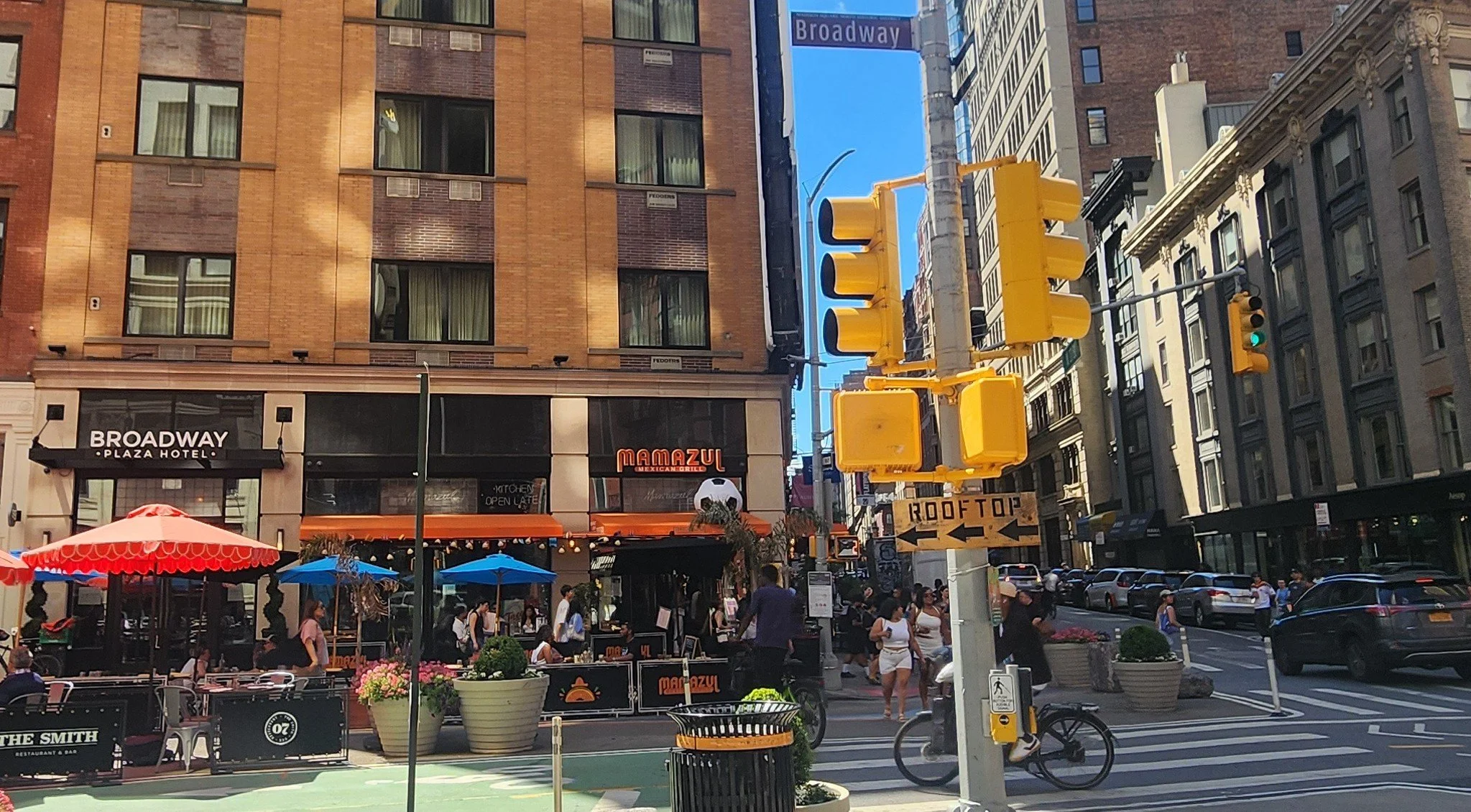
1155 Broadway, the location of the first commercially exhibited motion pictures. (Photo by the author.)
From there, I was ready to head back up to Penn Station for the beginning of my return trip home. Across the street from Penn Station – on top of which sits Madison Square Garden, where I had seen crowds for the historic Knicks/Spurs NBA finals gather, and where Taylor Swift would marry Travis Kelce a few weeks after I left – was a Rose’s Pizza, what had become one of my favorite spots for a slice in between screenings.
I ate a lot of pizza in NYC. A quick review of my phone shows me eight pictures of pizza, and I know I didn’t take a picture of every slice. Any time I had more than an hour or so between screenings, my first thought was where to grab a slice before the next movie started. (This practice led to one of the best meatball subs I’ve ever eaten.) I also had an epiphany about why I love pizza so much.
At one point during the trip, I came across an iconic New York City sewer grate. I snapped a photo and sent it to a group chat. “Do I even need to type the lyrics to the theme song,” I asked in the caption. My brother suggested that I should leave a whole pizza by the grate as an offering.
When I was a kid, my favorite Teenage Mutant Ninja Turtle was Michaelangelo. More often than not, when he wasn’t battling the evil foot clan or Shredder, Michaelangelo had a big ole floppy slice of New York-style pizza in his hand. What I’m saying is, I’m pretty sure the reason I love pizza as much as I do is because of an anthropomorphized turtle who knows martial arts. As Jeffrey Beaumont once told Sandy Williams, “It’s a strange world...”
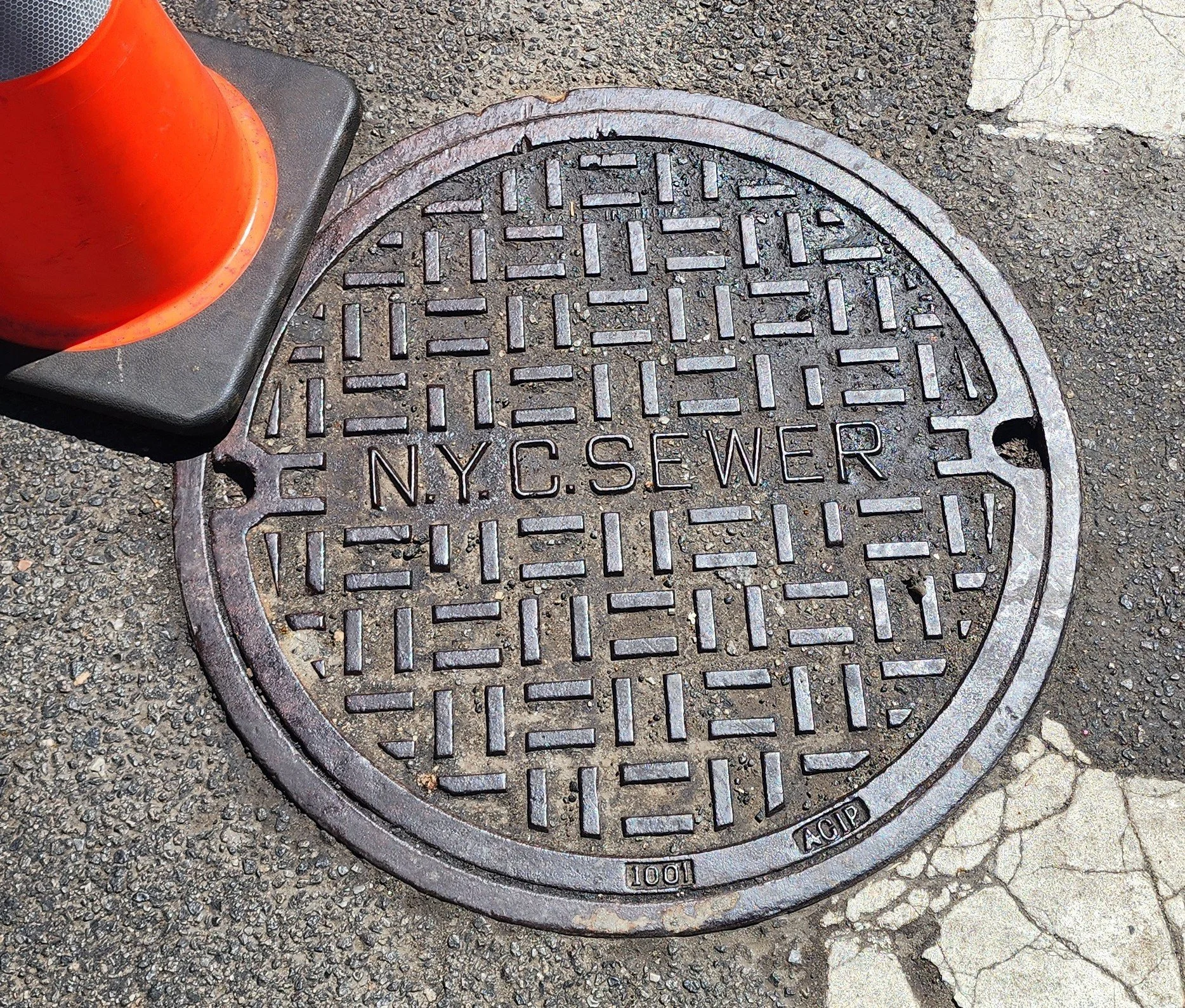
Heroes in a half-shell. Turtle power. (Photo by the author.)
**********
There was a World Cup game on the TV as I sat down with my pizza at Rose’s – I made my last meal in the city a classic, a slice of pepperoni and a slice of margherita with a bottle of coke. If you paid attention in the slightest to the conversation happening around the actual games, it’s clear that the FIFA organization is one of the most corrupt institutions in history. There are billions of dollars to be made around the World Cup phenomenon, and the elites connected to FIFA are doing everything they can to cash in. Seeing the odious FIFA president, Gianni Infantino, invent and gift a “peace” prize to Donald Trump to keep the grift going is all the evidence you need of corruption.
I watched the match (I couldn’t even tell you now which teams were playing) as I ate my pizza. I reveled in the pure sport happening in front of me. This is what all the corruption is about. This is why we put up with the price gouging and the horrendous politics of sport. (Anyone who tries to convince you that sports and politics don’t mix has no idea what they’re talking about. For proof, check out how Mussolini used a World Cup to sell the Italian flavor of fascism to the world.)
The fleeting minutes when the athletes are on the field (or pitch), (presumably) doing everything in their power to claim victory over their opponents, offers a purity and clarity of purpose undiluted by anything other than honest competition. (So called “prediction markets,” however, have arrived to spoil any remaining hope we held for sporting matches being officially untouched by gambling.)
Movies are my sports. Assuming it’s not rank propaganda or crassly commercial, a movie is an attempt to capture some truth about the human experience. I had thirty different experiences with people and cultures from around the world, projected onto a screen, thanks to Tribeca 2026. My first visit to New York City was unforgettable. It’s one I hope to repeat, if not for the movies, for the pizza. The Pizza!
As always, thanks for reading.
Movies are neat.
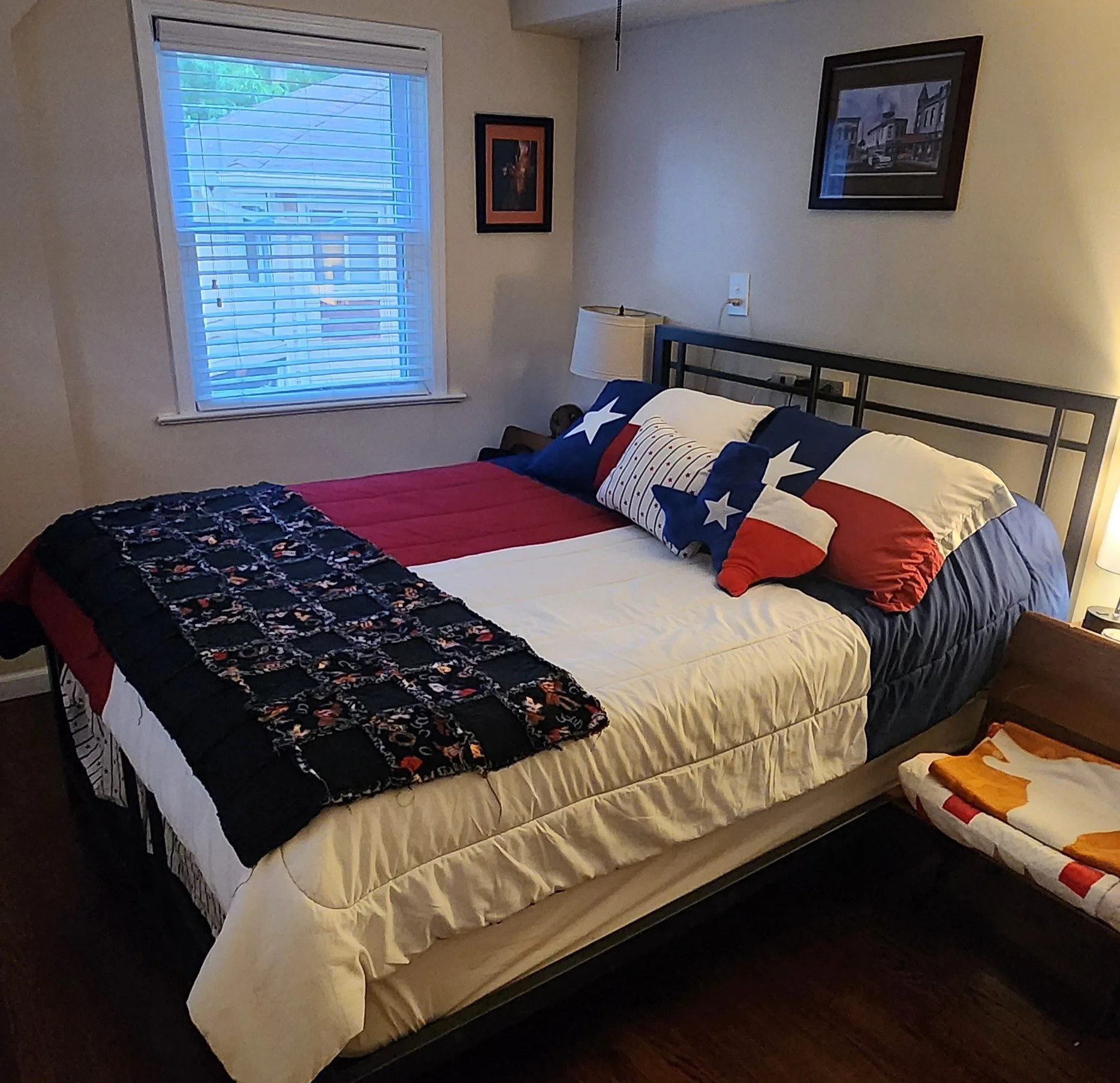
My home away from home in NYC, the Texas Room. (Photo by the author.)

Seen written on the side of an NYC building. (Photo by the author.)