
I’ve been thinking a lot about movie theaters lately. In the wake of its sale to Sony Pictures Experiences in 2024, the quality of the experience at movie-geek Mecca Alamo Drafthouse Cinema has gone through a noted decline. Alamo Drafthouse once shamed you for even thinking about using your phone during the movie, but it now requires you to use a QR code to order food during your screening.
The great David Ehrlich, movie critic and film-thinker at IndieWire, recently wrote a withering and, at times, depressingly hilarious assessment of the current state of this once beloved indie movie house chain. The incisive Ehrlich slips in a jab at the fact that Sony shouldn’t even be allowed to own a theater chain, that is if the US Department of Justice in 2022 hadn’t terminated the nearly-75-year-old Paramount Decrees, which were an antitrust attempt at encouraging competition.
The disgusting oligarch class (read: Epstein class) in the US has all but wiped the idea of antitrust legislation from our collective national memory. When behemoth corporate conglomerates own everything, enshittification ensues; making line go up becomes the only goal.
In his piece, Ehrlich relates his sense of awe and wonder during his first visit to an Alamo early in his career. I had been to Alamo many times before my own “My God, it’s full of stars” moment at the theater. That came in 2022, when I covered Fantastic Fest at the flagship Alamo location in Austin, TX.
It was eight straight days of walking into the theater, ordering some food, and watching a movie, three to four times a day, every single day. It was heaven. Alamo practically standardized having food delivered to your seat before or during the movie – and they also perfected it with the paper slip system of ordering with minimal disruption – but those days are over as Sony enshittifies the chain in an effort to reduce staff as much as possible to make line go up. (I also wonder if running off Alamo’s loyal fanbase is part of the plan, an effort to kill a competitor to Sony’s streaming offerings.)
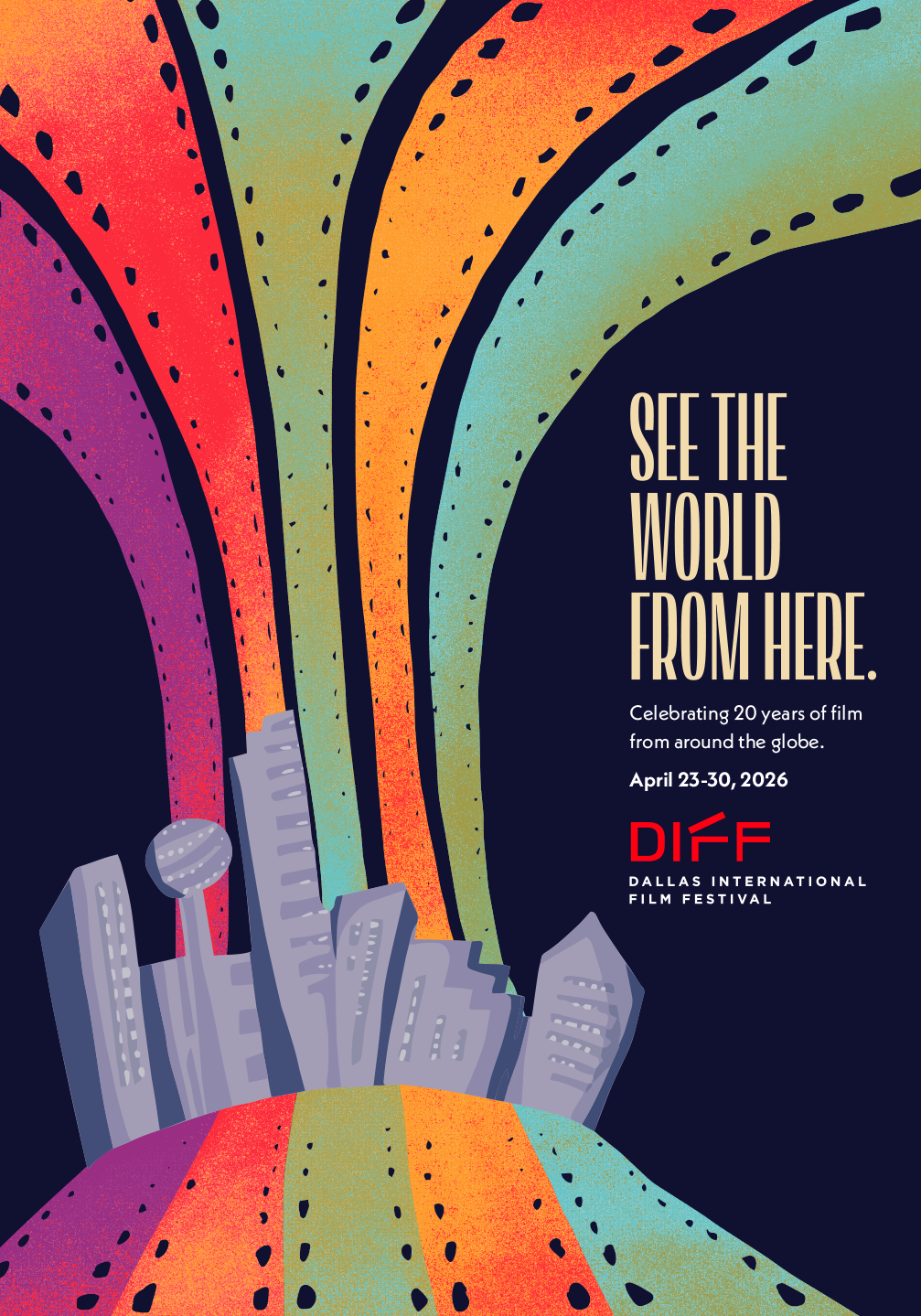
I began this wrap-up of DIFF 2026 with the above as a way to praise another movie theater integral to this year’s DIFF experience. Multiple screenings for the fest took place at my beloved Texas Theatre, including both the opening and closing night films. The bulk of DIFF screenings happened at the fest’s main hub, Cinépolis, because, with only two screens, the Texas doesn’t have the capacity to screen the over 100 titles that were on offer during DIFF.
Cinépolis is fine, but it has a very sanitized, corporate feel, nothing like even the currently diminished Alamo Drafthouse – which, despite its downward trajectory, still feels like a shrine to film culture in some fleeting ways. Cinépolis fashions itself as a higher-end AMC or Cinemark with, thanks to the model that Alamo innovated, a full restaurant menu complete with seat-side ordering and delivery. As with AMC or Cinemark, though, Cinépolis ultimately delivers a soulless, corporate experience. (The food is actually quite tasty, though.) Like most gargantuan multiplexes, the auditoriums at Cinépolis are cavernous, which make the Q&As of a film festival feel lifeless.
(Also, there were issues with the mics at every single Q&A I attended at Cinépolis this year. I’m begging –BEG-GING-GUH! – that the staff of the Victory Park Cinépolis, please, for the love of the Magic Invisible Sky Wizard, take the mics you use for Q&As and throw them in the trash. Buy a brand-new set of mics and change the batteries once a month, whether needed or not. To quote an absolute piece of shit, “Thank you for your attention to this matter!”)
As I’ve written about previously here, and here, the Texas Theatre is a one-of-a-kind, magical way to watch a movie. I went to a screening there a few months ago, and the friend I was with commented on the theater’s unique aesthetic and decoration. The most wonderful thing about the Texas is the fact that it’s irreplicable. It would be impossible to franchise what the Texas is, just like it would be impossible to franchise what the Music Box Theatre, in Chicago, is.
The risk that comes with the financial precarity of such a small operation is, I’m sure, ever present. But it’s comforting to know that the likelihood of this special place being destroyed in order to make a few people very rich (as was the case with the Alamo sale) is relatively small. I cherish the Texas, and I appreciate how lucky I am each time I walk in to watch a movie there.
**********
The back-half of DIFF 2026 revealed some real gems. Among them was American Baby, a short feature from director Ellen Rodnianski. This movie about teen pregnancy focuses on Oli, a second-generation American whose mother moved herself and her daughter to a small Texas town from Ukraine.
When Oli gets pregnant in high school, the town becomes judgmental and begins shunning both of the women, who are only trying to build new lives for themselves in a new country. It’s heartbreaking and enraging when the local (and seemingly very welcoming) pastor tries to convince the pair that they might want to take a break from coming to church because of Oli’s “condition.” It gets even worse when Oli convinces her mother that she should continue to participate in community events. She’s still the town’s “favorite Ukrainian lady,” Oli tells her mother. It’s Oli who the townspeople really want to shame and punish.
The two young leads, Abigail Pniowsky as Oli, and Elisha Henig as the father of the baby, both turn in affecting performances. You might recognize Henig as the actor who portrays Pootie-Shoe in the Apple TV+ comedy series Mythic Quest. The end of American Baby surprised me with the completely unexpected decision the two characters make that leaves the audience desperately wondering what happens next.
**********
Monday night served up the Stodghill Classic Movie at DIFF. This year’s offering was Butch Cassidy and The Sundance Kid. There’s been plenty written about this classic western, so all I’ll comment on is that, if you’ve never seen George Roy Hill’s ode to these folk heroes of the Old West on the big screen, you’re missing out on an incredible experience. I ran into a familiar fellow fest-goer a few days after the screening who told me he skipped Butch Cassidy because, he said, he could watch it at home whenever he wanted. He missed something special; cinematographer Conrad Hall’s sublime photography projected onto a giant screen was transcendent. Hall won the first of his three Best Cinematography Oscars for his work on Butch Cassidy.
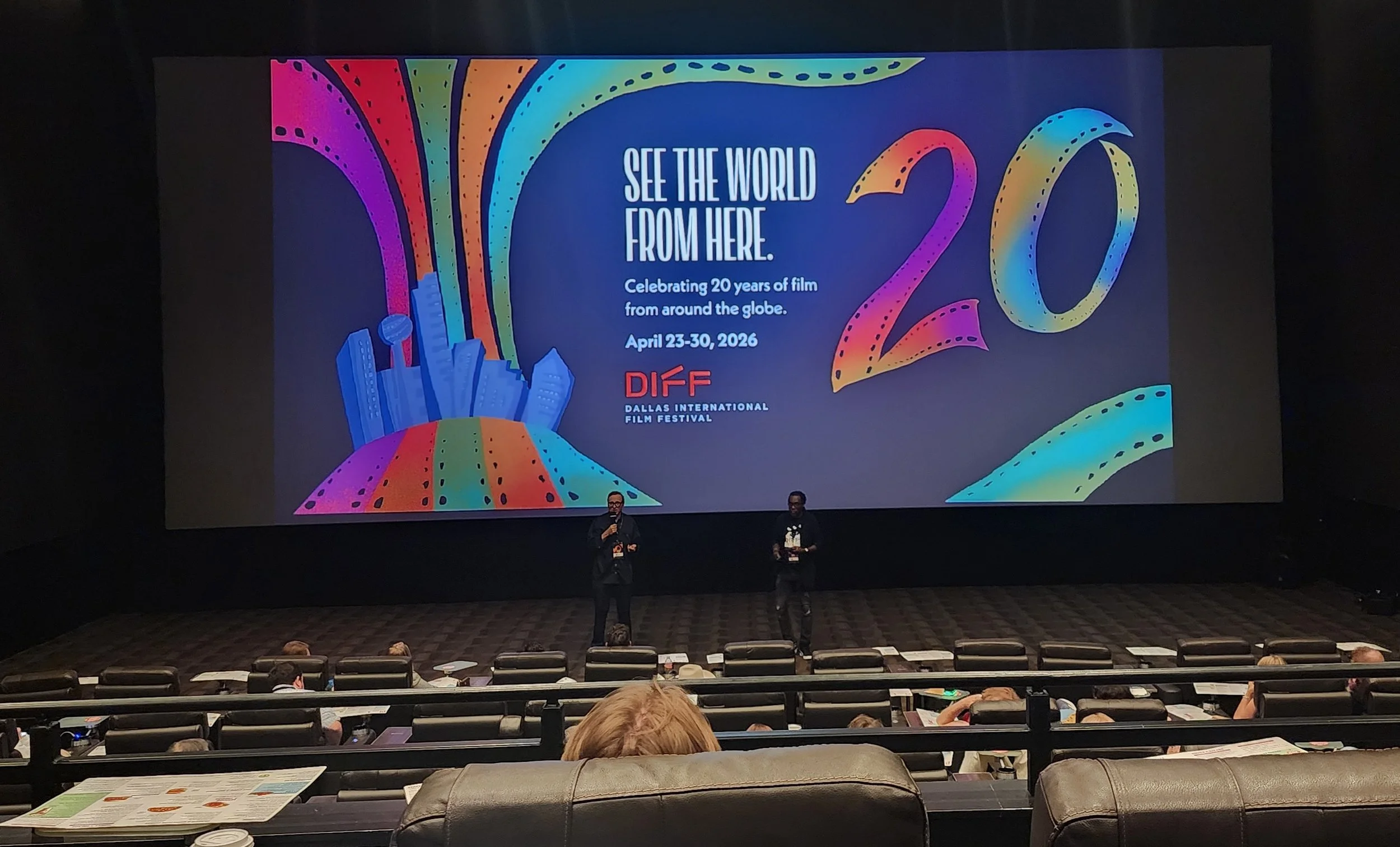
The view from my seat at Butch Cassidy and The Sundance Kid. DIFF Artistic Director, James Faust (right) helps introduce the movie.
**********
I was absolutely floored by an Italian drama from director Vincenzo Alfieri called 40 Seconds. The best way to put my experience with 40 Seconds is to describe it as Amores Perros, Italian style. The film tells of the events leading up to a tragic instance of violence late one night in a small Italian town, and how each of the six main participants came to be there.
Alfieri’s picture deftly shuttles back and forth in time, as we begin the day from the perspective of each of the six characters. We meet a pair of 20-something brothers who act as enforcers for local organized crime. We meet the pregnant wife of one of the brothers and her father, who is less than enthusiastic about his daughter’s romantic pairing. We also meet Willy, a young Black man who dreams of becoming a chef.
We see how these people’s personal choices led them to the climactic event, which becomes more devastating as you get to know each character. We start putting the puzzle pieces together leading up to the savage act of violence as we learn more about how these people are connected. I’m being a bit cagey with the plot, because Alfieri structures the movie as a mystery. 40 Seconds opens with the climactic event, but we can’t see who the violence is perpetrated on until close to the end of the picture.
There’s no way to preserve one other aspect of the story. I walked into 40 Seconds knowing virtually nothing about it, and I was stunned to learn in the movie’s final seconds that it’s based on a true story, depicting events that occurred in 2020. I’ll leave it there to let you discover the precise details for yourself.
**********
A pair of shorts, Make No Mistake: These are the Glory Days (15 minutes) and Tomorrow's Too Late (65 minutes), explored the trans experience from a particular angle. The subjects of both films are musicians, and we get to see their struggles in intimate ways.
Make No Mistake focuses on Florida band Home Is Where, as the two lead trans women of the band take to the road in support of their sophomore album. The movie is only fifteen minutes long, but a sequence at the end, in which one of the band members delivers an electric spoken word performance of an original poem, is emotionally pulverizing yet at the same time uplifting and filled with hope. The fifteen minutes of Make No Mistake were some of the best I spent at DIFF 2026.
Tomorrow’s Too Late follows British pop star Dylan Holloway, who was born and found fame initially as a female but, as we see in the film, transitions to being a male. Dylan’s number one concern is losing the one thing that has brought him solace, his singing voice. Tomorrow’s Too Late and Dylan chronicle the astonishing changes that come with transitioning, and the singer records himself singing the same song over the course of a year while on testosterone treatments.
The première of the final mixdown of the song, in which Dylan makes harmonies from each version of his changing voice, is a stunning moment in the film. We see Dylan struggle throughout the movie with losing the high octaves he was able to reach before transitioning. It’s a revelatory moment when we see the singer let go of what he used to be able to do with his voice in favor of embracing the new things he can now do with it.
**********
Rounding out my DIFF 2026 adventures were a profoundly moving documentary titled One in a Million, about the experience of a Syrian refugee who resettles in Germany as a young teenager; If I Go Will They Miss Me, a movie from director Walter Thompson-Hernández about a Black 12-year-old’s fraught relationship with his father that uses magical realism to splendid effect; and finally Kenny Loggins: Conviction of the Heart, in which I got to know the legendary musician who ruled the airwaves in the 1970s and 80s beyond his massive hits Footloose and Danger Zone. The phrase “yacht rock” wasn’t uttered once in the movie, making me wonder if Loggins hates the term.
I’ll simply quote the Letterboxd blurb I dashed off immediately after screening One in a Million: “If you see this and still want ‘mass deportations,’ I don't want to know you.” If I Go Will They Miss Me is an incredibly self-assured debut feature from Thompson-Hernández. It’s probably cliché by now to invoke the name Barry Jenkins when praising a contemplative and mystical meditation on the Black experience, but I was reminded of Moonlight as I watched If I Go. Thompson-Hernández gets a wonderful performance from child-actor Bodhi Dell as Lil Ant, and the character’s mother, Lozita, is brought fully to life by the wonderful Danielle Brooks.
**********
I’ve come to love DIFF as my friendly neighborhood film festival. Each spring, I look forward to it as one of the first major fests of the movie year. (And, since SXSW wouldn’t let me in this year, DIFF was THE first major fest of 2026 for me.) As I teased in my DIFF 2026 Report from the Field, I have some major news incoming about covering my first out-of-state festival. I’m keeping it under wraps for now, but watch this space in the next few weeks for a major announcement!
As always, thanks for reading.
Movies are neat.