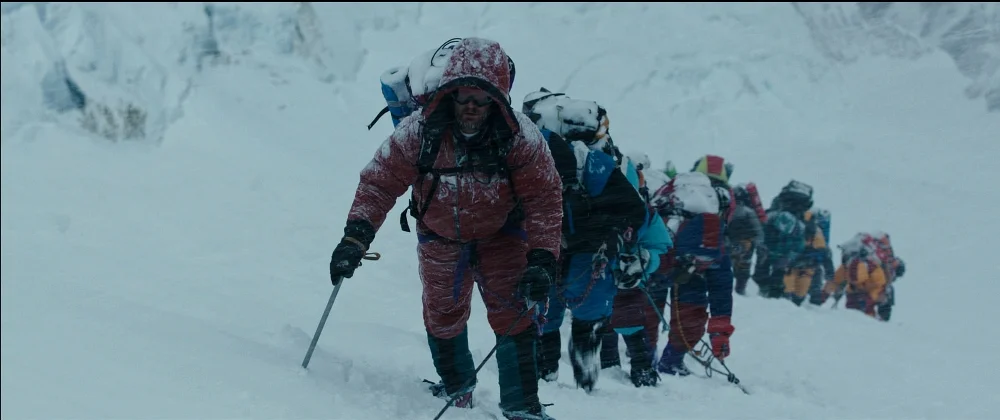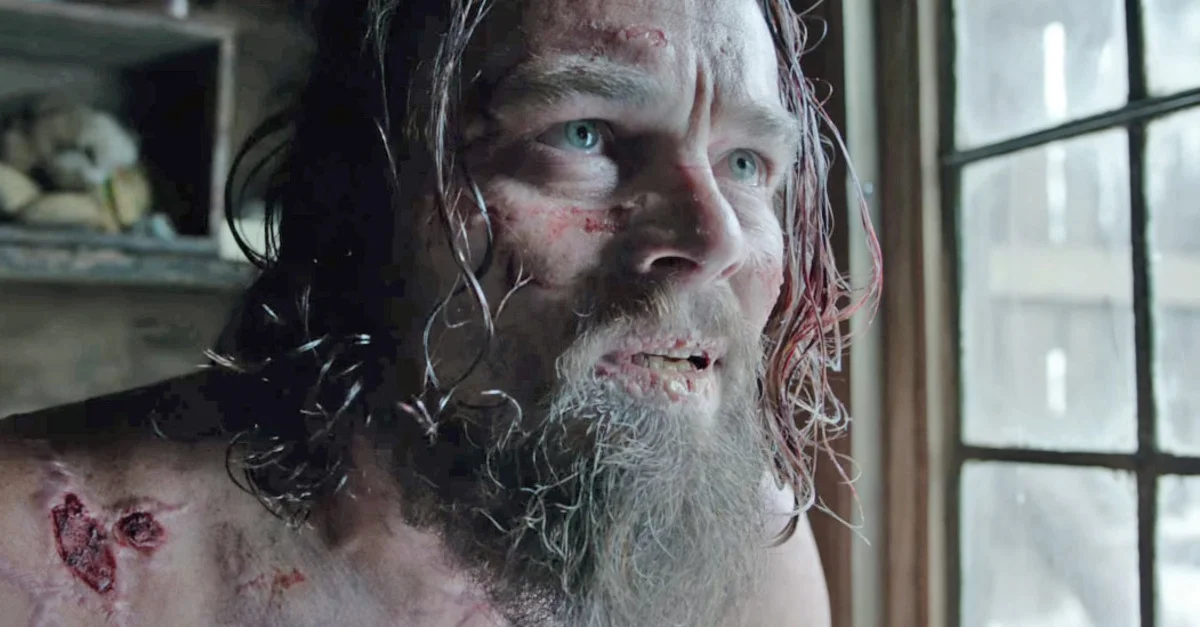
The Revenant is two-thirds of a great movie. The problem with that other third can be summed up by the two alternate titles I came up with while watching the film: Suffering: The Movie and Everything Is Terrible. That’s more sarcastic than The Revenant deserves, really, but after watching Leonardo DiCaprio in agonizing pain for over two hours, I mentally checked out of the movie. That a man could survive such a harrowing set of circumstances is extraordinary, but the way director Alejandro G. Iñárritu focuses so intently on the pain is relentless, and it becomes narratively uninteresting. It’s a sizable flaw in a movie that is also visually breathtaking, technically intricate, superbly acted and, at times, spiritually transcendent.
Set in 1823, The Revenant, loosely based on Michael Punke’s 2002 novel, tells the story of Hugh Glass, a fur trapper and expert frontiersman. Glass is serving as a guide for an expedition of trappers in the untamed wilderness of the Dakotas. The hunters are attacked by a group of Arikara Native Americans, and panic ensues. In the scramble to find safety, Glass accidentally disturbs a mother grizzly bear and her cubs. The bear mauls Glass, and the expedition leader, Captain Andrew Henry, asks for volunteers to stay with Glass until he dies, so he can be properly buried. A member of the crew, John Fitzgerald – who antagonized Glass earlier in the trip because of Glass’ half Native American son, Hawk – offers to look after the badly wounded man after Henry says he’ll pay whoever stays. Fitzgerald is anxious to get to his pay, so he leaves Glass for dead after just a day. The rest of the film details Glass’ attempts at getting back to civilization and settling the score with Fitzgerald. Screenwriters Iñárritu and Mark L. Smith invented Hawk, the son, for the movie. It’s a way of upping the stakes even more, because Fitzgerald kills Hawk, so he can catch up with the hunting party.