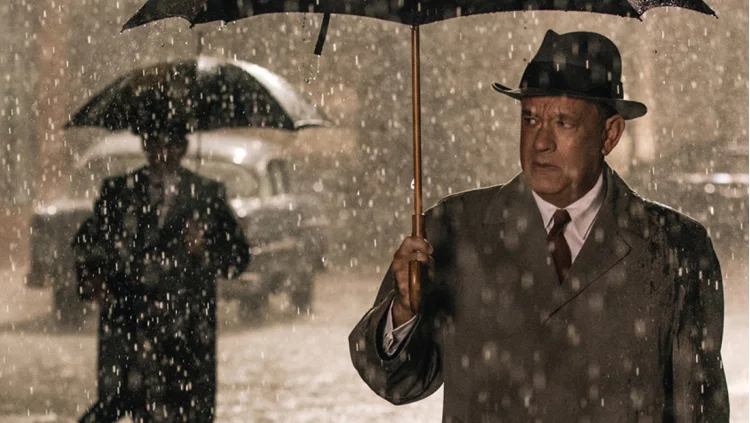
Bridge of Spies is a tale of two films. The second half of Steven Spielberg’s newest historical drama is a good representation of the high level of quality associated with the director’s work. The finale is dramatically tense and emotionally powerful while remaining understated in the message it conveys. The first half stands in stark contrast to all of that; it’s hindered by its rote execution and the way it delivers moral lessons as subtly as an atomic bomb. Bridge of Spies could be leaner and more effective if Spielberg and screenwriters Matt Charman and the Coen brothers had concentrated solely on the second dramatic arc of the story. As it is, the film gives the overall impression of being unfocused.
The movie begins in 1957 as the FBI arrests Rudolf Abel (Mark Rylance) on suspicion of being a Soviet spy. The evidence against Abel is quite damning, but the U.S. government wants to show the world that everyone, even those accused of espionage, is afforded the same protections under the law. This protection boils down to having access to competent legal counsel. To that end, the FBI convinces James Donovan (Tom Hanks) – an insurance settlement lawyer with criminal trial experience – to represent Abel. Donovan believes in the American justice system, so he provides his client with a zealous defense, even moving forward with an appeal when Abel is convicted on all counts. He does this to the chagrin of his colleagues at the firm, the judge in the case, and even his own family.
It would be one thing if the writers stuck to the maxim of “show, don’t tell” to illustrate the moral superiority of treating even the worst criminals with the same dignity and humanity granted all U.S. citizens. After all, the case can be made that it’s a lesson worth re-learning since the war on terror began – especially for those in positions of power. But Charman, Spielberg and the Coens don’t just show. They tell, and tell, and tell. Tom Hanks is one of the finest actors of his generation, and his performance in Bridge of Spies is as good as you would expect. But by the fifth or sixth time he explains the importance of due process to those who want blood, the point becomes excruciatingly belabored.
Read more...
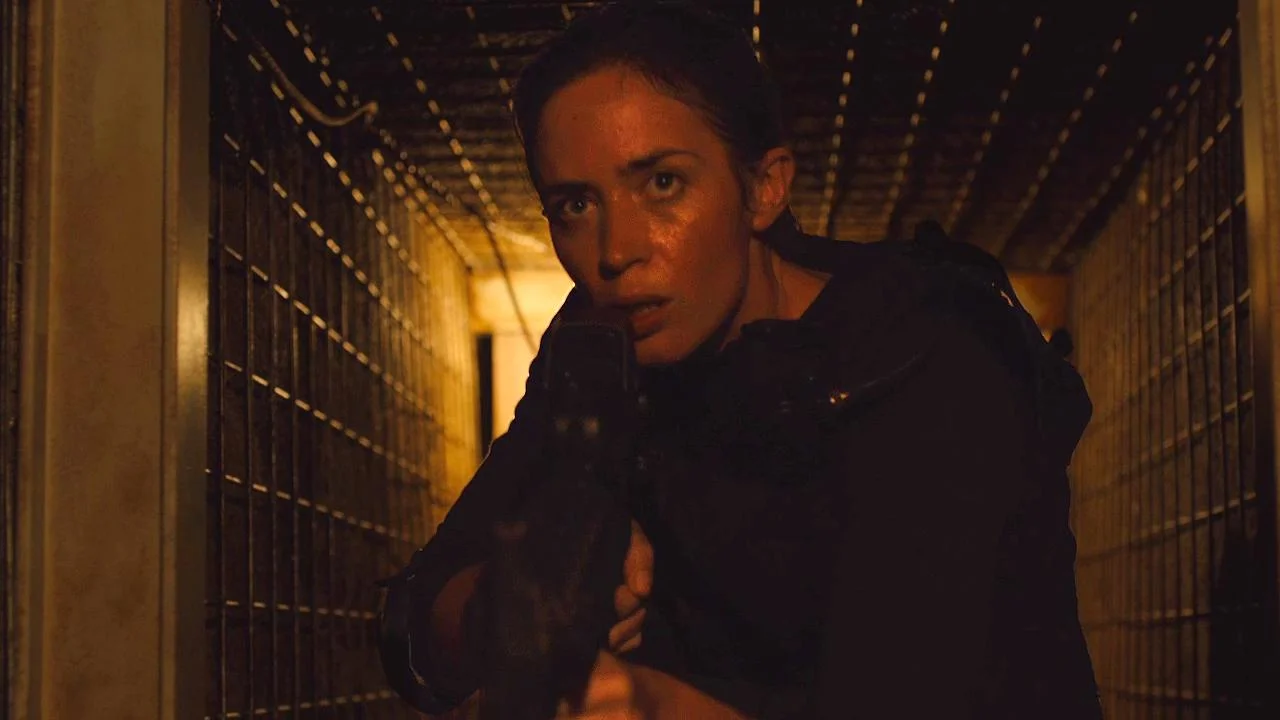
If the Oscars nominate Sicario for a best picture award next January, it will be one more example against the argument that “Hollywood” is nothing but a bunch of looney liberals who promote a far leftist agenda. A few handicappers currently have it as a top tier contender. The film is about the U.S. government’s escalating tactics to stop narcotics from crossing the border between Mexico and the States. It is Zero Dark Thirty for the war on drugs, playing like Dick Cheney’s wet dream. The movie is a perfect representation of how neocons like Cheney and his ilk envision prosecuting not only the war on terror, but all wars. They alone get to decide what the rules of engagement are. Sicario is a reactionary, far-right fantasy that’s all the more depressing because it’s probably not that different from reality.
The film begins with FBI agent Kate Macer (Emily Blunt) en route to raid a house in Arizona where a Mexican drug cartel is suspected of holding kidnap victims. When the raid is over, Macer and her SWAT team make a gruesome discovery: the cartel hid dozens of bodies inside the walls. The situation gets even worse when several FBI team members are killed by an improvised explosive device rigged in a backyard shed. Macer’s boss introduces her to Matt Graver (Josh Brolin), a mysterious figure who is leading a new task force. The explosion and deaths in Arizona have changed the game, Graver explains, and they need to take the fight to the cartels. He wants Macer to join his team, but she has to volunteer. She does, with the stipulation that she can bring her partner Reggie (Daniel Kaluuya) along. Their convictions are soon put to the test. Witnessing blatant disregard for the rule of law and an invasion of sovereign territory, Macer eventually suspects the use of torture, as well. All in the name of fighting the war on drugs.
Read more...
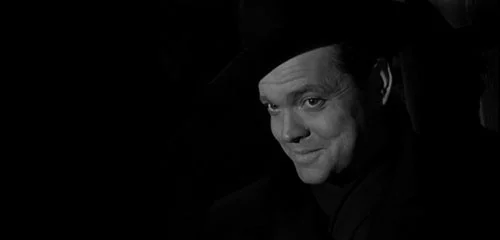
Holly Martins has the worst luck. The broke writer travels to Vienna shortly after the end of World War II because his best friend, Harry Lime, offers him a job. Within the opening minutes of director Carol Reed’s classic noir thriller The Third Man, Martins walks under a ladder – a harbinger of bad luck – and soon learns that a car struck and killed Lime a few days earlier. Martins is now adrift in a foreign land with no money and no prospects, but things are about to get much worse. Major Calloway, a British officer who is part of the post-war occupying force in Vienna, tells Martins that his childhood friend was a criminal, a profiteer within the city’s thriving black market. Martins decides to clear his friend’s good name and, as a result, he’s pulled into intrigue that challenges his belief in the decency of humanity. Along the way he meets Anna, Lime’s lover, who is ferociously loyal and is devastated by his death.
Because we’re travelling through noir country in The Third Man, the worldview is bleak, practically nihilistic. Made in 1949, the film explores the existential crisis experienced after the most deadly war in history ended. Life is cheap, take all you can while you can, and don’t look out for anybody but yourself.
Read more...
The question with biopics is always what should be included, and what’s reasonable to leave out. Depicting the events of even a few years of a person’s life is incredibly hard to do. The filmmakers have to hone in on a very carefully selected handful of events that will convey to the audience the essence of the people and times the film covers. By that standard, Straight Outta Compton is a frustrating disappointment. It’s frustrating because the shortcomings of the narrative detract from what is otherwise a powerful piece of filmmaking.
Stylish and gritty, Straight Outta Compton will surely become the definitive visual history of the musical revolution set off by artists Easy-E, Dr. Dre, Ice Cube, DJ Yella, and MC Ren. Director F. Gary Gray, with the help of cinematographer Matthew Libatique, created a film that’s gorgeous to look at, and has been praised by people who experienced the time and place the film covers – such as Selma director Ava DuVernay in a tweet storm about her reaction to the movie.
The problem with the film is that the winners, specifically Dr. Dre, got to write their own history. Dre was among the producers for the film, and his character is written as undeniably heroic. He’s a flawed hero, to be sure, but he’s a hero who stands up to violence and those who perpetrate it. Unfortunately for him, we live in a time when the people stepped on by the winners can still have their say. As a result, Straight Outta Compton rings hollower than it otherwise would.
Read more...
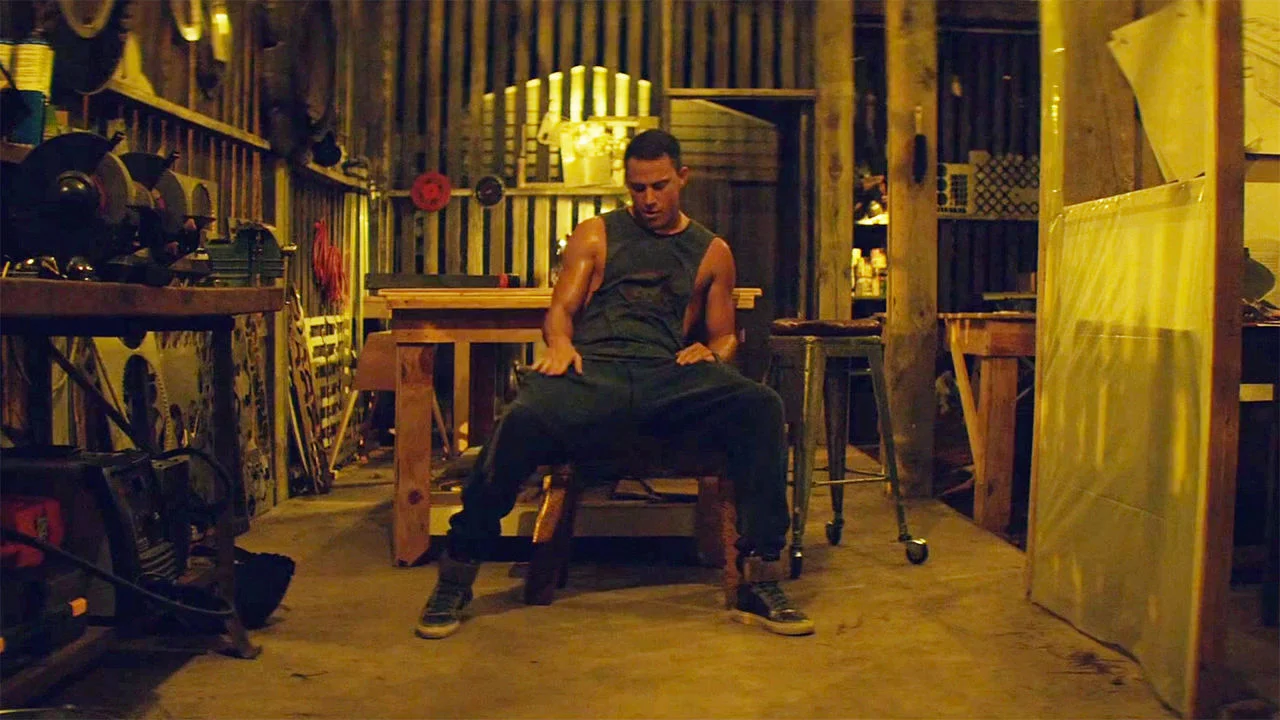
Mary Ann Bernard knows how to give the audience what they want. After a quick establishing shot, the editor of Magic Mike XXL cuts to a close-up of star Channing Tatum’s dreamy face for the first ten seconds of the movie. The crowd I attended the movie with (made up of about 95% women) started cheering and clapping as soon as he appeared, sitting quietly in repose staring at a beach at sunrise. Mary Ann Bernard is actually the pseudonym for filmmaker Steven Soderbergh. In addition to editing, he also handled cinematography under his alias Peter Andrews. For this sequel to his 2012 exploration of the male exotic dancing world, he handed over directing duties to his long-time assistant director Gregory Jacobs. Together, the two made a movie – with the help of screenwriter Reid Carolin – that really surprised me.
Read more...